Before You Move: Sort This in Your Home Country
1. Visa — Your Most Important First Decision
Your visa determines how long you can stay, whether you can open a bank account, and in some cases whether you can sign a long-term lease. Get this sorted before booking flights.
| Visa type | Duration | Best for |
|---|---|---|
| Visa-exempt | 30 days (+30) | Testing the island before committing |
| Tourist Visa TR | 60 days (+30) | First longer stay, before deciding on long-term visa |
| DTV Visa | 180 days (+180) | Remote workers, digital nomads, seasonal expats |
| Non-O Retirement | 1 year | Age 50+, long-term residents |
| Non-O Marriage | 1 year | Married to a Thai national |
| Thailand Elite | 5–20 years | Those who want zero visa complexity |
💡 For most people moving to Phuket in 2026, the DTV Visa is the most practical starting point — 180 days per entry, extendable by 180 days inside Thailand, no work permit needed for remote work. → DTV Visa Service
2. Book Temporary Accommodation First
Don’t sign a long-term lease before you’ve spent time on the island. Phuket’s areas have very different characters — what sounds perfect online can feel wrong in person. Book a serviced apartment or monthly rental for your first 4–6 weeks while you explore.
Areas most popular with new arrivals: Bang Tao / Laguna (north, families, beach clubs), Rawai / Nai Harn (south, expat community, quieter pace), Kathu (central, inland, most affordable), Phuket Town (local character, lowest rents).
3. International Health Insurance
Thai private hospitals are excellent — but expensive without insurance. Bangkok Hospital Phuket charges Western-level prices for specialist care. Arrange comprehensive international health cover before you arrive, not after your first accident or illness.
4. Home Country Admin
- Notify your bank of the move — many block cards used from Thailand without warning
- Set up mail forwarding or a registered address at home for official correspondence
- Check your tax position — Thailand introduced new tax rules for foreign income in 2024 that affect long-term residents
- Download a VPN before you leave — some services and content are geo-restricted in Thailand
- Get an International Driving Permit (IDP) from your home country — required to drive legally in Thailand
Arrival Day: Your First Hours in Phuket
5. Clear Immigration Without the Queue
Phuket Airport immigration queues run 60–90 minutes during peak season (November–March). If you’re arriving with luggage, tired after a long-haul flight, and need to navigate to your accommodation — this is exactly the moment Fast Track pays for itself.
Our Fast Track service at Phuket Airport meets you at the aircraft exit and escorts you through the priority immigration lane. Through in 10–15 minutes.
6. Private Airport Transfer
Phuket taxis are technically metered — but many airport drivers negotiate fixed rates 2–3× higher. Book a private transfer in advance. Our airport transfer service covers all areas with fixed, transparent pricing — no first-day negotiation.
7. Get a Thai SIM Card
Available at the airport arrivals hall. AIS and True Move are the most reliable on the island. A monthly data SIM runs 300–600 THB. Line (messaging app) is how most Thais and local businesses communicate — download it alongside WhatsApp.
First Week: Getting Established
8. TM30 Address Registration
Within 24 hours of arriving at your accommodation, your landlord or hotel must file a TM30 — a notification to immigration of your address. Hotels do this automatically. Private landlords often need prompting. Without a current TM30 you cannot extend your visa, apply for a Certificate of Residence, or complete most immigration procedures.
9. Moving Your Belongings
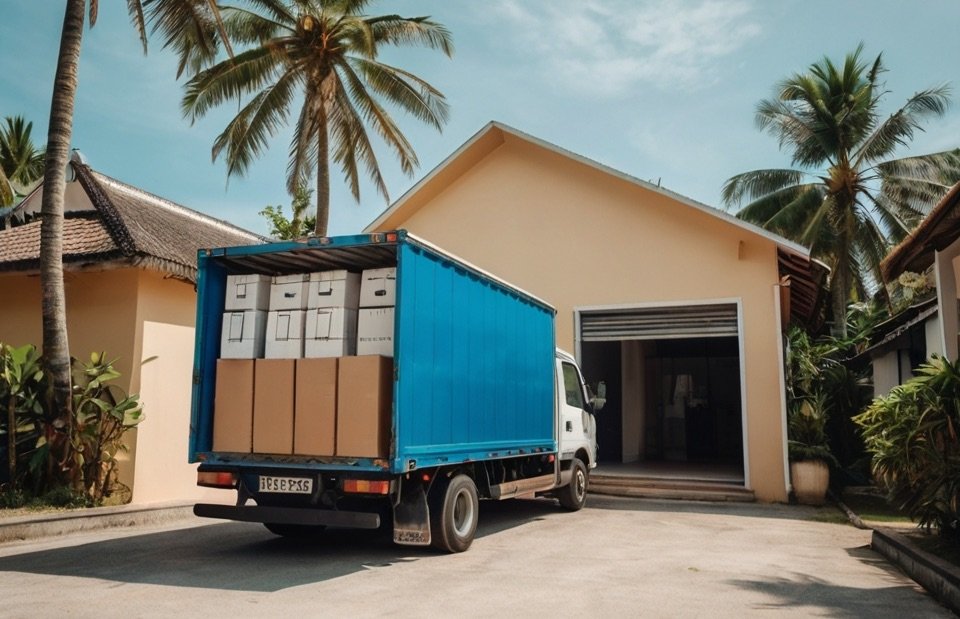
Shipping household goods to Phuket or moving between properties on the island? Our moving service handles everything from single-item deliveries to full apartment relocations — same-day available, 24/7, all areas of Phuket.
10. Get Wheels
Public transport in Phuket is limited — you need personal transport. Most expats start with a motorbike rental before deciding whether to buy. Our motorbike and car rental services offer monthly rates with island-wide delivery.
⚠️ Driving licence: You need a Thai licence or IDP to drive legally. Riding without one is common — but if you’re in an accident, your insurance is void and liability falls entirely on you. Apply for a Thai driving licence at the DLT office in Phuket Town (requires Certificate of Residence) or use your IDP from home.
11. Open a Thai Bank Account
A Thai bank account simplifies rent payments, local transfers, and using Thai payment apps (PromptPay, Rabbit LINE Pay). Most expat-friendly options: Kasikorn (K-Bank) and Bangkok Bank. Requirements tightened in 2025–2026 — typically passport, visa, TM30, and sometimes a Certificate of Residence. Call the specific branch before visiting.
12. Certificate of Residence
An official document from Phuket Immigration confirming your address. Required for: Thai driving licence application, vehicle registration, some bank account openings, and certain visa procedures. Our team processes this without you needing to queue at immigration: Certificate of Residence service →
First Month: Settling In Long-Term
13. Sign Your Long-Term Lease
After testing the island for 4–6 weeks you’ll have a clearer sense of the right area and property type. Long-term rentals are typically 6 or 12 months. Before signing: confirm TM30 registration is the landlord’s responsibility, ask for previous electricity bills (AC running 24/7 in a villa can add 5,000–8,000 THB/month), and check the early termination clause.
14. Set Up 90-Day Reporting
On any long-term visa, if you stay in Thailand for more than 90 consecutive days, you must file a 90-day report at immigration — a notification of your current address. Can be done online at immigration.go.th or in person at Phuket Immigration. Missing the window incurs a 2,000 THB fine.
15. Register with a Doctor
- Bangkok Hospital Phuket — JCI-accredited, accepts most international insurance, best for complex care
- Phuket International Hospital — solid general care, more affordable
- Bangkok Hospital Siriroj — good for families, southern part of the island
- Register with a GP at an international clinic for routine consultations — saves going to a hospital for minor issues
16. Internet and Utilities
Fibre internet (100–1,000 Mbps) is available across most of Phuket — True, AIS, and 3BB are the main providers. Installation takes 3–7 days after landlord approval. Factor electricity costs carefully: air conditioning in a large villa running around the clock can cost 8,000–12,000 THB/month on top of base charges.
17. Connect with the Expat Community
Phuket’s expat network is large and well-established — most new arrivals build a social circle faster than expected. Starting points: the Phuket Expats Facebook group (80,000+ members), local gyms and Muay Thai camps in Rawai and Chalong, Bang Tao Beach Families group if you have children, and the regular community events that run through high season.
Our Relocation Services at a Glance
✈️ Fast Track — Airport Arrival
Skip the 60–90 min immigration queue. Personal assistant meets you at the aircraft exit.
Book Fast Track →🚗 Airport Transfer
Private transfer from HKT to anywhere on the island. Fixed price, no first-day negotiation.
Book Transfer →📦 Moving Service
Apartment and villa relocations across Phuket. Same-day available, 24/7.
Moving Service →🛂 Visa & Immigration
DTV, Non-O, stamp extension, 90-day reports, Certificate of Residence.
Visa Services →🏍️ Motorbike & Car Rental
Monthly rental rates for new arrivals. Island-wide delivery.
Rental Options →📄 Certificate of Residence
For driving licence, bank accounts and vehicle registration. No immigration queue.
Get Certificate →Cost of Living in Phuket — Realistic Numbers (2026)
| Expense | Budget | Comfortable | Luxury |
|---|---|---|---|
| Rent (1-bed) | 12,000–18,000 THB | 20,000–35,000 THB | 40,000+ THB |
| Food | 8,000–12,000 THB | 15,000–25,000 THB | 30,000+ THB |
| Transport | 3,000–5,000 THB | 5,000–10,000 THB | 15,000+ THB |
| Utilities + internet | 3,000–5,000 THB | 5,000–8,000 THB | 10,000+ THB |
| Health insurance | 3,000–5,000 THB | 5,000–10,000 THB | 15,000+ THB |
| Total (single person) | ~35,000 THB | ~60,000 THB | ~100,000+ THB |
Frequently Asked Questions
How long does it take to settle in Phuket?
The first month is logistics — visa, housing, transport, banking. By month two or three most expats feel genuinely at home. The established international community means new arrivals build a social network faster than they expect.
Can I work remotely from Phuket legally?
Yes — working remotely for an overseas employer on a DTV visa is legal in Thailand as of 2026. No Thai work permit required for this. Working for a Thai employer or Thai clients requires a work permit.
Is Phuket safe for expats?
Generally very safe. The main risk is road safety — motorbike accidents are common, particularly in the first weeks before riders adapt to Thai traffic. Take a short motorbike safety course if you’re new to riding, and always wear a helmet.
Can I bring my pet to Phuket?
Yes. Thailand allows pet imports with: health certificate issued within 10 days of travel, rabies vaccination record, and microchip. The process takes several weeks to arrange and requirements vary by country of origin.
Do I need to speak Thai to live in Phuket?
Not to get by — English is widely spoken in expat and tourist areas. Basic Thai phrases help with landlords, local markets, and daily interactions and are appreciated by Thais even when imperfectly used.
🌴 Moving to Phuket? Let’s Make It Easy
Fast Track on arrival, private transfer, moving service, visa assistance, rental vehicles, Certificate of Residence — one team, one contact, everything arranged.
📱 WhatsApp ✈️ Telegram